Listening is not enough: our response to the national maternity investigation

We are responding because the findings reflect what local women, birthing people and families have been telling us for years. This is not new territory for us.
Through our engagement with local communities, our contribution to improving maternity services across north east London, and our critical role in hosting the Maternity and Neonatal Independent Senior Advocate (MNISA) pilot working with bereaved families, we have seen first-hand the consequences when people's experiences are heard but do not lead to visible improvement.
Led by Baroness Amos and informed by the experiences of more than 10,000 people, the investigation describes a maternity system where too many women were not listened to, where discrimination, racism and inequality affected the care people received, and where families were too often left without answers when things went wrong. It is a sobering report, but its findings are sadly familiar.
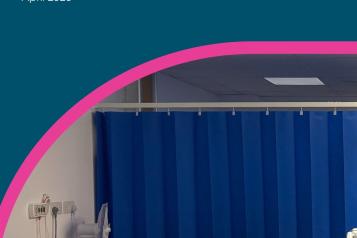
Earlier this year we visited the Mulberry maternity ward at Whipps Cross Hospital to better understand local maternity experiences. We spoke to women and their families, and they told us that while they welcomed the refurbished ward, they also described delays when calling for help, receiving care that felt dismissive at the hardest moments, and, in the most serious accounts, being made to feel responsible for what had gone wrong. In a family's own words: “We felt blamed and judged at what was an already distressing time.” Families whose first language was not English described additional barriers to being heard.
These experiences also echo what we have heard in our wider engagement work across north east London. In 2022, Healthwatch partners worked with the Integrated Care Board on the Maternity Equity and Equality Action Plan. Even back then, women and birthing people, particularly those from Black, Asian and other global majority communities, told us about discrimination, poor communication and barriers to accessing care.
The national investigation reinforces what local people have clearly been saying for some time.
The question now is not whether the system has listened. It is whether listening will result in visible change.
For Healthwatch Redbridge, three priorities for action stand out.
Listening must lead to visible action. Families must see how their experiences have shaped improvements in care. The maternity system has heard these concerns before—through Ockenden, through local engagement and now through Amos. Listening is rendered pointless if feedback does not lead to meaningful change. Trust is undermined, and opportunities to improve safety are lost.
Racism and inequalities must be recognised as a patient safety issue. Where care is influenced by ethnicity, faith, language, disability, age, immigration status or where someone lives, this is not simply a question of experience — it is a question of safety. Addressing these inequalities requires clear accountability, transparent measurement, sustained action and evidence of change.
Families need independent advocacy and clear routes to be heard. Our experience of hosting the national MNISA pilot showed the difference independent support can make when families are facing complex, distressing situations. It also reinforced that speaking up is not equally easy for everyone: language barriers, unequal power dynamics and discrimination can all make it harder to raise concerns or challenge decisions.
The MNISA pilot has now ended. Women’s own accounts in the BHRUT supplementary report cited by Amos (2026) show the difference it made, and raise a real question about whether the signposting that has replaced it is enough. Families need timely support, trusted advocacy and clear escalation routes, so serious concerns are understood and acted on quickly.
That support must be properly resourced and available locally, rather than relying on families’ confidence, fluency or persistence. National leadership now needs to translate into practical provision that helps prevent harm from escalating.
We will continue working with Healthwatch partners, north east London maternity providers and the Integrated Care Board as a constructive but candid critical friend. We will keep gathering people’s experiences, challenging slow progress and ensuring local voices shape safer, fairer maternity care.
If you have received maternity care in Redbridge, we would like to hear about your experience, whether it was positive, difficult or somewhere in between. Every experience helps us build a clearer picture of what is working, what needs to improve and where change is needed.
All women in Redbridge deserve maternity care that is safe, compassionate and equitable, every time.
Healthwatch Redbridge Chair, Gita Malhotra, said:
“We are beyond the point where another report, however important, is enough on its own. The body of evidence is extensive, and so many of the messages are strikingly consistent, from national investigations to the often-heartbreaking experiences local people continue to share with us.
What matters now is whether this evidence is translated into real material change that women and families see and feel in the care they receive. After years of listening, the priority must be action, accountability and sustained improvement. Healthwatch Redbridge will continue to play its part in ensuring that local voices remain central to that work”